Section 1
How to spot it
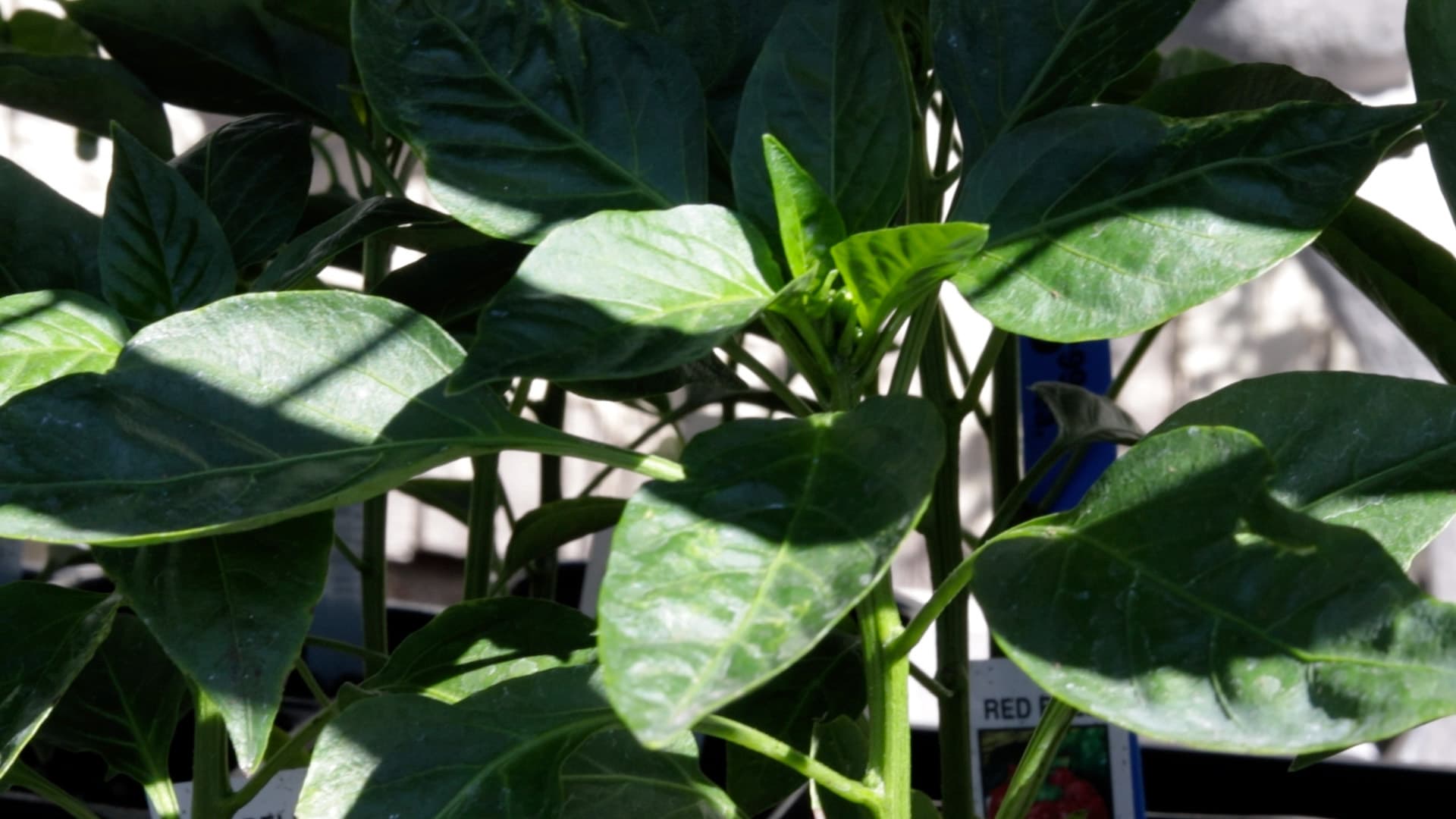
Newest leaves turn pale yellow first. Veins remain dark green -- the signature pattern. In severe cases the entire leaf turns cream-white and curls. Most common on tomatoes, peppers, pin oak, river birch, maple, raspberries, and any acid-loving plant in our soil. Not the same as nitrogen deficiency, where ENTIRE leaves yellow including veins, starting with old leaves.
Section 2
Emergency rescue: foliar iron
Iron chelate (Sequestrene 138, Ironite, Fertilome) sprayed on leaves at label rate. Greens up plants in 3-7 days. Best applied in early morning or evening -- leaves take it up faster when stomata are open. Repeat every 2-3 weeks through the growing season. This is a band-aid, not a cure.
Section 3
Long-term fix: lower soil pH
Apply elemental sulfur in fall -- 1 lb per 100 sq ft for vegetable beds, 1 lb per inch of trunk diameter for trees. Work into the top 4 inches around the dripline. Soil bacteria slowly oxidize sulfur to sulfuric acid over 4-8 months. Re-test pH the following spring. Most Utah soils need repeat applications for 3-4 consecutive years to get below 7.0.
Section 4
What does NOT work
Pouring vinegar on the soil -- burns roots, evaporates without changing pH meaningfully. Coffee grounds -- neutral by the time they decompose. Pine needles -- barely move pH. Aluminum sulfate -- works fast but toxic to soil biology long-term. Skip these and stick with elemental sulfur + foliar iron.
Section 5
When to give up on a plant
If a tree has been chlorotic for 3+ years despite amendments, it's probably the wrong tree for the site. Pin oak, river birch, and red maple are the worst offenders in Utah -- better to remove and replace with hackberry, gambel oak, or chinkapin oak (alkaline-tolerant). Some plants just don't belong here, no matter how much iron you throw at them.