
Skip to content
SUS Farms — Allegedly Organic

soil · beginner · 5-min read

Mulching strategies for Utah dirt

Mulch is the cheapest soil-improvement tool. It cuts evaporation by 50%+, suppresses weeds, moderates soil temperature, and breaks down into organic matter. Different mulches suit different crops and seasons.

The 60-second version

Key takeaways

  • 01.Test your soil before amending — guessing wastes money
  • 02.Compost top-dress (1-2") every fall is the highest-impact amendment
  • 03.pH adjustment with sulfur takes 4-8 months — start in fall
  • 04.Iron chlorosis (yellow leaves, green veins) is a Utah classic — treat with foliar iron + fall sulfur

Section 1

Straw — the workhorse

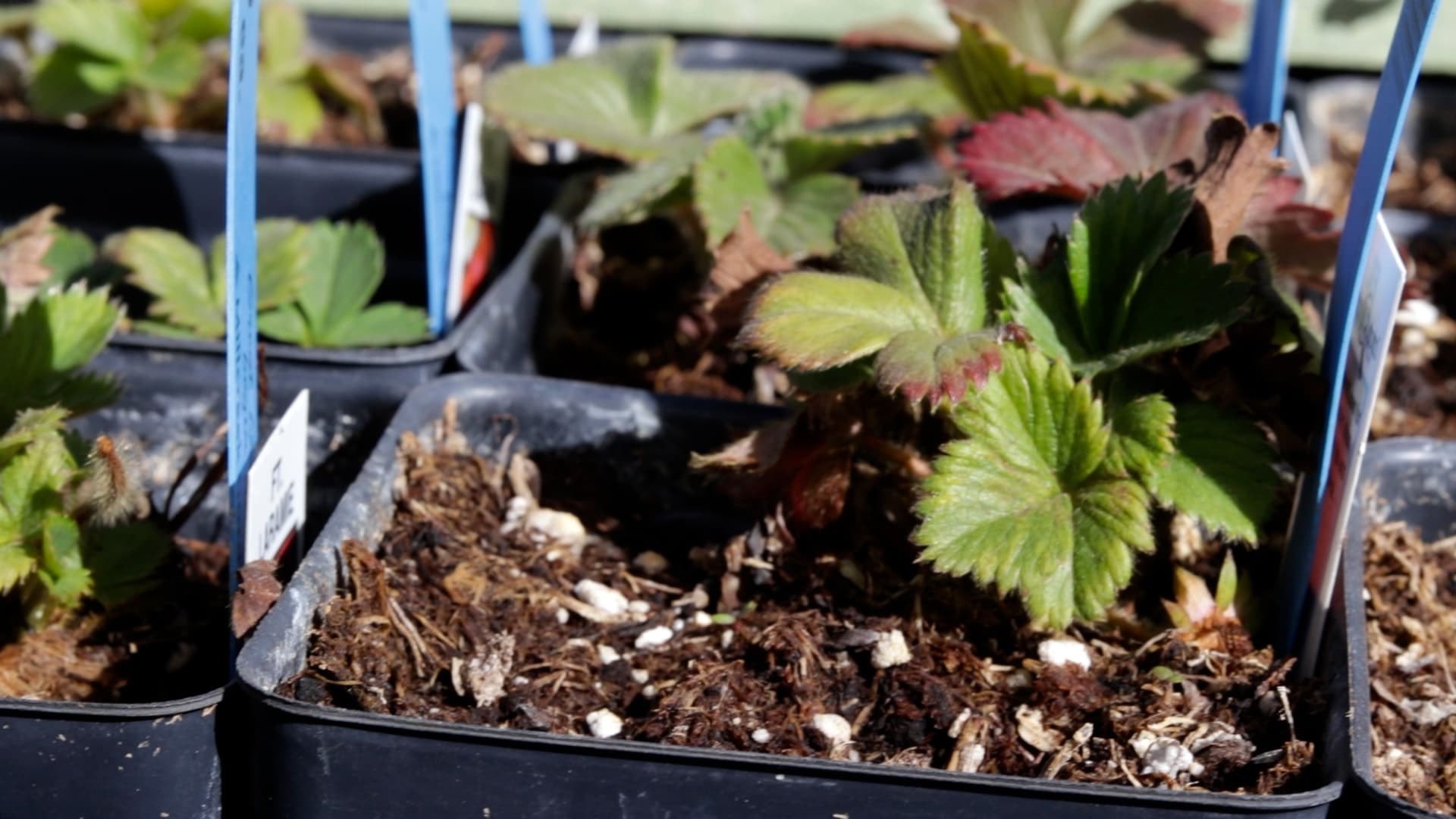
2 inches deep around vegetables, garlic, and strawberries. Light reflects up under fruit, slugs love it (so check), but it's cheap, breaks down in one season, and adds carbon to the bed.

Section 2

Wood chip — paths and perennials

Best for fruit-tree wells, perennial beds, and walking paths between vegetable rows. Avoid mixing wood chip into vegetable bed soil — it ties up nitrogen as it decomposes.

Section 3

Compost — fertilizer + mulch in one

Half-inch top-dress on vegetable beds in spring is a mulch and a feeding at the same time. Worms pull it down for you.

Section 4

Black plastic — earlier tomatoes

Lay 4-mil black plastic on the bed two weeks before transplant. Soil temperature jumps 8–10°F. Plant through slits. Pull at end of season — plastic doesn't feed soil and tears up by year three.

Tools & materials

What you’ll actually need

The shopping list. Everything below earns its place — we wouldn’t list a tool we don’t actually use on the farm.

pH meter or USU mailer test kit

Tells you exactly what amendments your soil actually needs. Worth $20 once every 3 years.

Broadfork

Loosens soil 12" deep without inverting layers. Replaces a tiller for raised beds.

Compost (1-2 cu yd per bed)

Annual top-dress. The single highest-impact soil amendment for any garden.

Elemental sulfur

Lowers alkaline pH over 4-8 months. 1 lb per 100 sq ft drops pH 0.5 unit.

Garden gloves and a 5-gallon bucket

Trivial but you'll reach for both more often than anything else.

Things we’ve done wrong

Common mistakes & how to avoid them

Each of these has cost us a season at some point. Easier to learn from someone else’s mess than your own.

1.

Skipping the soil test

The fix:A $20 mailer test from USU Extension tells you what your soil actually needs. Without it you're guessing — usually adding what you don't need and missing what you do.

2.

Working wet soil

The fix:Wet soil compacts into bricks that take a season to recover. Squeeze a handful — if it forms a tight ball that doesn't crumble, wait a week.

3.

Tilling every year

The fix:Annual deep tilling destroys soil structure and kills the fungal networks that feed plants. Broadfork instead — vertical penetration without horizontal disruption.

Common questions

Frequently asked

+How does Utah's climate affect mulching strategies for utah dirt?

Utah is high, dry, alkaline, and seasonally extreme. Compared to the humid east-coast advice in most gardening books, we deal with shorter shoulder seasons, more intense summer sun and UV, lower humidity (faster water loss), and soils that lock up iron and zinc. Adjust east-coast guidance accordingly: more water-conscious, more shade in summer, more attention to soil pH.

+Where do I find Utah-specific research?

USU Extension (extension.usu.edu/yardandgarden/) maintains the deepest archive of Utah-specific plant research in the state. Their Master Gardener helpline answers homeowner questions free. The Utah Climate Center at climate.usu.edu publishes 30-year climate normals for nearly every weather station — useful for planning frost dates and water budgets.

+How long until I see results?

Depends on what you're measuring. Soil amendments take 1 full season to show effects (sulfur for pH takes 4-8 months). Pest exclusion shows immediately. New plantings need 2-3 seasons to establish before drought tolerance kicks in. The biggest win is consistency — small actions taken weekly outperform big once-a-year efforts.

+Can I do this on a small backyard, or do I need acreage?

Almost everything in this guide scales down. A 4×8 raised bed, a few containers on a deck, or even a single fruit tree in a side yard each benefit from the same principles as a working farm — they just operate at different volumes. Container gardening is its own art and is well-suited to renters and small spaces.

Sources:USU Extension — Mulches·SUS Farms field notes, Sevier County