
warm season · Asteraceae
Growing African Daisy (Harvest Moon) in Utah
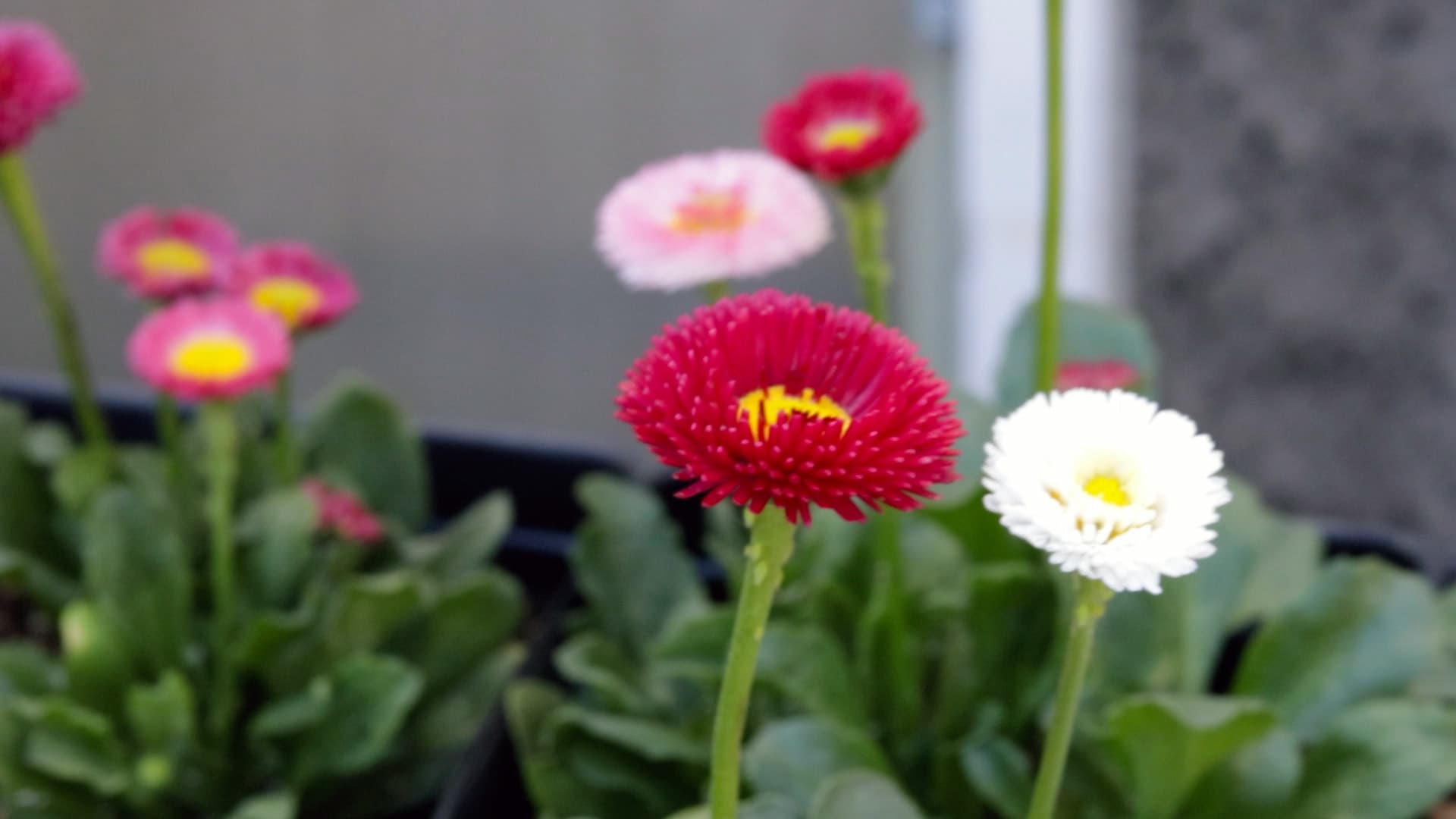
Osteospermum -- closes at night and on cloudy days. Heat- and drought-tolerant once established.
Schedule (May 15 last frost)
When to do what
Start indoors
3/20
Transplant out
5/22
First harvest
8/7
Dates are calibrated for SUS Farms (Sevier County, Zone 6a, last frost May 15). For your own date, use the interactive calendar.
Planting
How deep, how far apart
Method
Start indoors
Seed depth
0.125″
Plant spacing
10″
Row spacing
12″
Germination temp
65–80°F
Days to maturity
75 days
How we grow it
Step-by-step
- 1.
Start indoors 8 weeks before last frost
Seed-starting mix in 2" or 4" cells. Bottom heat at 65–80°F until germination, then drop to room temperature. Light from a clip lamp 14–16 hours a day, 2" from the leaves.
- 2.
Harden off for 7 days before going outside
Day 1: 1 hour outside in shade. Add an hour and more sun each day. Skip the day if it’s windy or below 50°F. After day 7 the plants stay outside.
- 3.
Transplant 10″ apart in rows 12″ apart
Soil should be at least 65°F before transplanting — black plastic mulch laid down two weeks ahead helps in our cool springs. Water in deeply.
- 4.
Mulch and water consistently
2" of straw or wood chip mulch around the base. Drip line at the surface. Aim for 1" per week — including rain — measured at soil level, not by the calendar.
- 5.
Harvest around day 75
Days-to-maturity is a rough guide — taste, color, and size are the real signals. Osteospermum -- closes at night and on cloudy days. Heat- and drought-tolerant once established.
From the farm
What we’ve learned growing african daisy (harvest moon)
African Daisy (Harvest Moon) earns its space in the garden because pollinators don't care about your tomato yield unless something invites them in. Plus, african daisy (harvest moon) pairs surprisingly well with vegetable beds -- interplanted strategically, it acts as a trap crop, a pollinator beacon, or just a reason to walk the rows in July when the work is most relentless.
Pests & problems
Asteraceae family pressures in Utah
African Daisy (Harvest Moon) shares its troubles with lettuce, sunflower, zinnia, marigold, calendula, cosmos, dahlia. The pests and diseases below show up most years; the fixes are what we actually do, not what catalogs sell.
Scout weekly during the growing season — most outbreaks are 10x easier to manage when you catch them in week one.
Pest 1
Aphids -- colonies on undersides of new growth. Beneficial insects (lacewings, ladybugs) handle most outbreaks if you stop spraying broad-spectrum insecticides.
Pest 2
Slugs (lettuce especially) -- rasped holes in leaves overnight. Diatomaceous earth, beer traps, or copper tape around bed edges.
Pest 3
Earwigs -- pinch holes in flower petals at night. Roll up newspaper, leave overnight, dump in soapy water in the morning.
Disease 1
Powdery mildew -- late-summer issue. Most common on zinnias; pick resistant cultivars (Profusion series).
Disease 2
Lettuce drop (Sclerotinia) -- sudden wilting at the base. Improve drainage, mulch shallowly, rotate every 3 years.
Companion planting
What to plant near (and away from) african daisy (harvest moon)
Most companion-planting charts you see online are folklore. The pairings below have either USU Extension research, Cornell vegetable MD pages, or our own multi-year farm logs behind them.
Plant near
Good companions
- ✓Tall flowers (zinnias, sunflowers) shade lettuce in summer to delay bolting
- ✓Carrots (no competition)
- ✓Onions (pest deterrent)
Plant away from
Bad companions
- ✗Beans (lettuce can stunt bean germination)
- ✗Dense plantings without airflow (mildew)
Crop rotation
Less critical than for Solanaceae or Brassicas -- Asteraceae are mostly pest-light. Still good practice to move 2-3 years.
Harvest & storage
Picking, keeping, preserving
Cut flowers
Cut in early morning when stems are turgid. Strip lower leaves, plunge into clean water immediately. Recut stems at a 45° angle once inside, ideally underwater. Change vase water every 2-3 days for longest vase life.
Drying
Hang small bundles upside down in a dark, dry, ventilated space. 2-3 weeks. Best for everlasting flowers (statice, strawflower) and seed heads. Most fresh-cut flowers don't dry well -- they crumple instead of preserving form.
Mistakes we’ve made
Common ways to fail at african daisy (harvest moon)
Each of these has cost us a season at some point. Easier to learn from someone else’s lost crop than your own.
Planting too deep
The fix:African Daisy (Harvest Moon) seeds want exactly 0.125" of cover -- about barely covered with a sprinkle of fine soil. Deeper than that and the seedling exhausts itself before reaching light. Carrots and lettuce especially: shallow is right; sprinkle, then cover with a dusting of soil and tamp gently.
Skipping the harden-off step
The fix:Plants raised under indoor lights have soft cuticles and weak stems. Move them straight outside and they sunburn, snap in wind, or wilt and never recover. The 7-day gradual sun exposure is mandatory, not optional.
Watering on a calendar instead of by need
The fix:Stick a finger or screwdriver 4" into the bed. Damp at depth = wait. Dry at depth = water deeply. Calendar watering ignores rain, heat waves, and seasonal evapotranspiration -- leading to either drought stress or root rot.
Ignoring soil pH
The fix:Most Utah backyard soil tests at pH 7.4-8.4 (alkaline). Iron and zinc become unavailable to roots above pH 7.5 -- leaves yellow, growth stalls. A $20 mailer test from USU Extension tells you exactly what your soil needs. Sulfur amendment in fall, foliar iron mid-season as needed.
Planting too early
The fix:A warm-season crop set out before soil hits 60°F at 4" depth sits and sulks -- sometimes for weeks before either dying outright or refusing to grow until July. Wait. Better to plant a week late than plant 3 weeks early into cold soil.
Common questions
Frequently asked about african daisy (harvest moon)
+When should I start african daisy (harvest moon) indoors in Utah?
In Sevier County (last frost May 15), start 8 weeks before -- that's roughly March. If you're at higher elevation (Park City, Logan), add 2 weeks. Lower elevation (Salt Lake, St. George), subtract 2-4 weeks. Use the interactive seed-starting calendar at /seeds/calendar to dial it in for your specific frost date.
+Why are my african daisy (harvest moon) leaves turning yellow?
Three usual suspects. (1) Iron chlorosis -- yellow leaves with green veins is the Utah classic; the cause is alkaline soil locking up iron. Foliar iron rescues the season; sulfur amendment in fall fixes it long-term. (2) Nitrogen deficiency -- entire leaf yellow including veins, starts with old leaves. Side-dress with compost or a slow-release organic fertilizer. (3) Overwatering -- yellowing accompanied by soft, mushy stems means the roots are drowning. Check drainage; reduce water frequency.
+Can I plant african daisy (harvest moon) before the last frost date?
Not safely. African Daisy (Harvest Moon) is a warm-season crop -- even a light frost (28-32°F) kills the plant or stunts it for the rest of the season. Wait until soil hits 65°F at 4" depth AND there are no freezing temperatures in the 14-day forecast. In Sevier County that's typically the third week of May. Black plastic mulch + floating row cover let you push planting 7-10 days earlier.
+How long does african daisy (harvest moon) take from seed to harvest?
75 days from transplant. Add 56 days for the indoor seed-starting phase, so total time from sowing seed to first harvest is roughly 131 days. Days-to-maturity is a baseline -- cool springs add a week or two; hot summers can speed up by similar amounts. Use it for planning, not as a strict calendar.
+What's the spacing between african daisy (harvest moon) plants?
10" between plants in the row, 12" between rows. That gives mature plants room to fill in without competing. Closer spacing reduces yield per plant; wider spacing wastes garden space. The numbers come from average mature plant size at full vegetative growth -- adjust slightly for compact varieties (closer) or large heirlooms (wider).
Same family (Asteraceae)
Related crops
Sources:Johnny’s Selected Seeds·USU Extension·Cross-checked with our greenhouse logs.