
A longer story
A moon-spotted goat,
giving birth.
Four short clips. One quiet barn. One of the things that actually happens on a working farm, told plainly.
Why we filmed it
Most people will go their whole lives without watching an animal be born. That is fine. But it shapes what people think a farm is, and it shapes what they think their food is. So when the doe went into labor on a regular Tuesday, we set up a camera and stayed quiet, and now we have this.
You can watch all four chapters in order, or skip around. The clips are short. The story is calm.
Chapter one
In labor.
"You learn the early signs after a few seasons. Restless. Off the food. Looking at the wall a little too long."
It usually starts the way anything important starts on a farm — quietly, and a little earlier than you planned for.
A moon-spotted doe, picked out a corner, decided this was the spot. We checked vitals, made sure she had clean straw, and then did the most useful thing you can do at this point: stayed out of the way.
Goats know how to do this. They have known how to do this for a very long time. Our job is mostly to be present and to make sure nothing goes sideways.
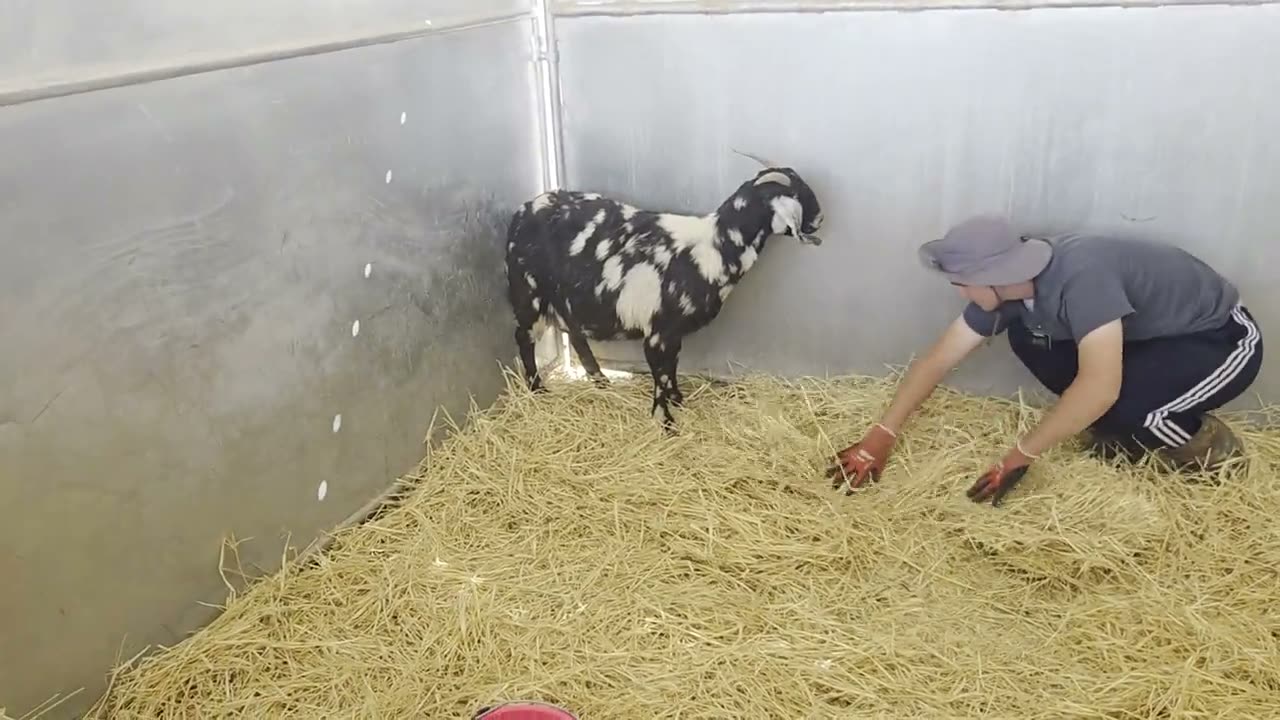
Chapter 1 — In labor
You learn the early signs after a few seasons. Restless. Off the food. Looking at the wall a little too long.
Chapter two
A baby arrives.
"There is no fanfare. Just a few minutes of work, and then a new animal in the world."
Birth on a farm is not theatre. It is biology, on schedule, in straw.
We talk people through it the same way we would walk you through a transplant: here is what is happening, here is what is normal, here is when you would be concerned. The video shows the moment without making a spectacle of it.
If watching is not your thing, that is fine. The next chapter is the calm part.
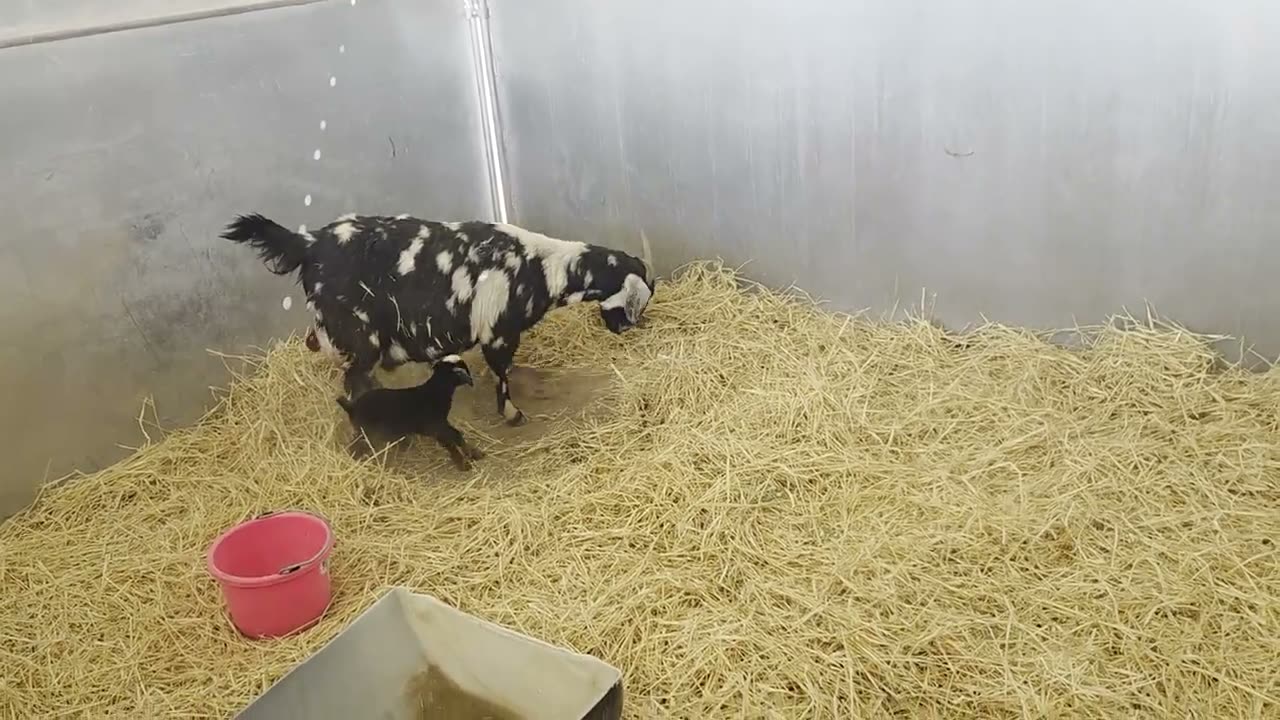
Chapter 2 — A baby arrives
There is no fanfare. Just a few minutes of work, and then a new animal in the world.
Chapter three
First look.
"On its feet inside ten minutes. Wobbling, blinking, eating. The whole job description, basically."
Within minutes, the kid is upright and looking for breakfast. Goats are built like that. They cannot afford a long warm-up in the wild and they did not bother evolving one.
Mom does the cleaning. We do the watching. The barn does what barns are supposed to do — stay warm, stay dry, stay out of the way.
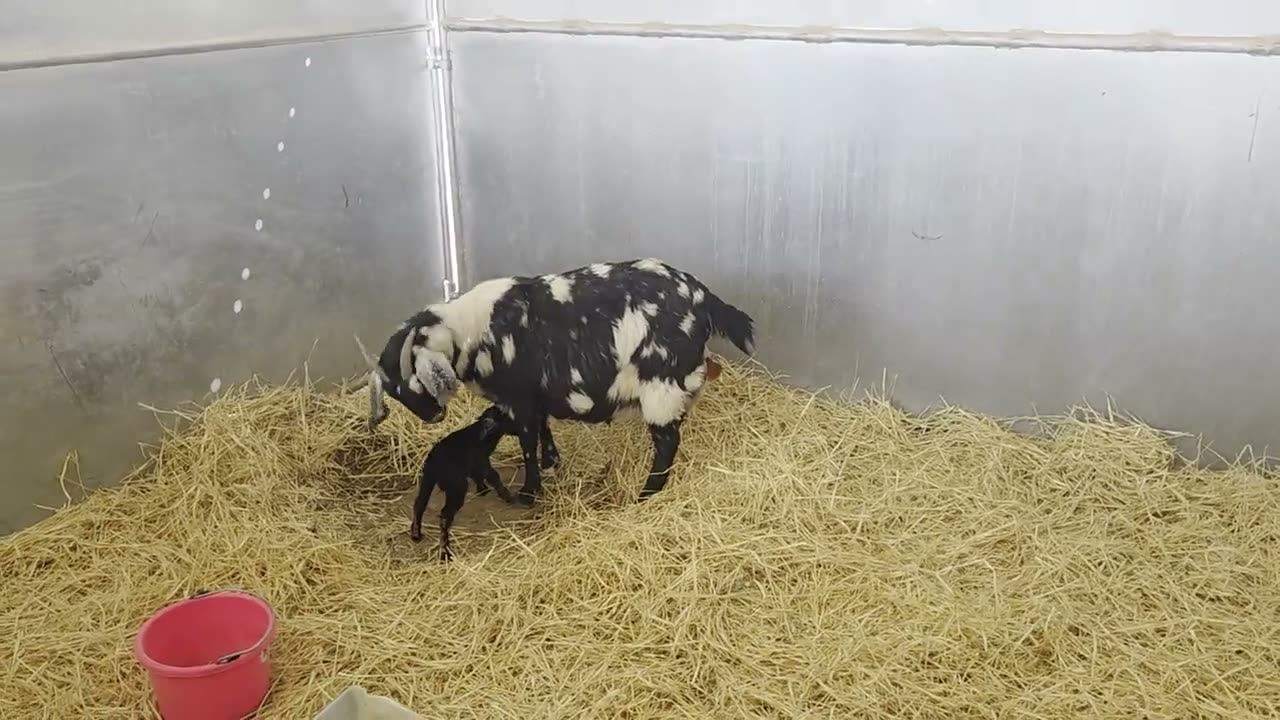
Chapter 3 — First look
On its feet inside ten minutes. Wobbling, blinking, eating. The whole job description, basically.
Chapter four
After-birth care.
"The medical part is small. The patient part is the whole rest of the day."
After-birth care is mostly observation. We make sure the kid is nursing, we check that mom passed everything she was supposed to pass, and we keep the area clean.
If something needs the vet, we call the vet. Most days, nothing does. Most days the most exciting thing that happens is that someone names the kid before the day is out, and the name sticks for the rest of its life.
And then everyone goes back to work.
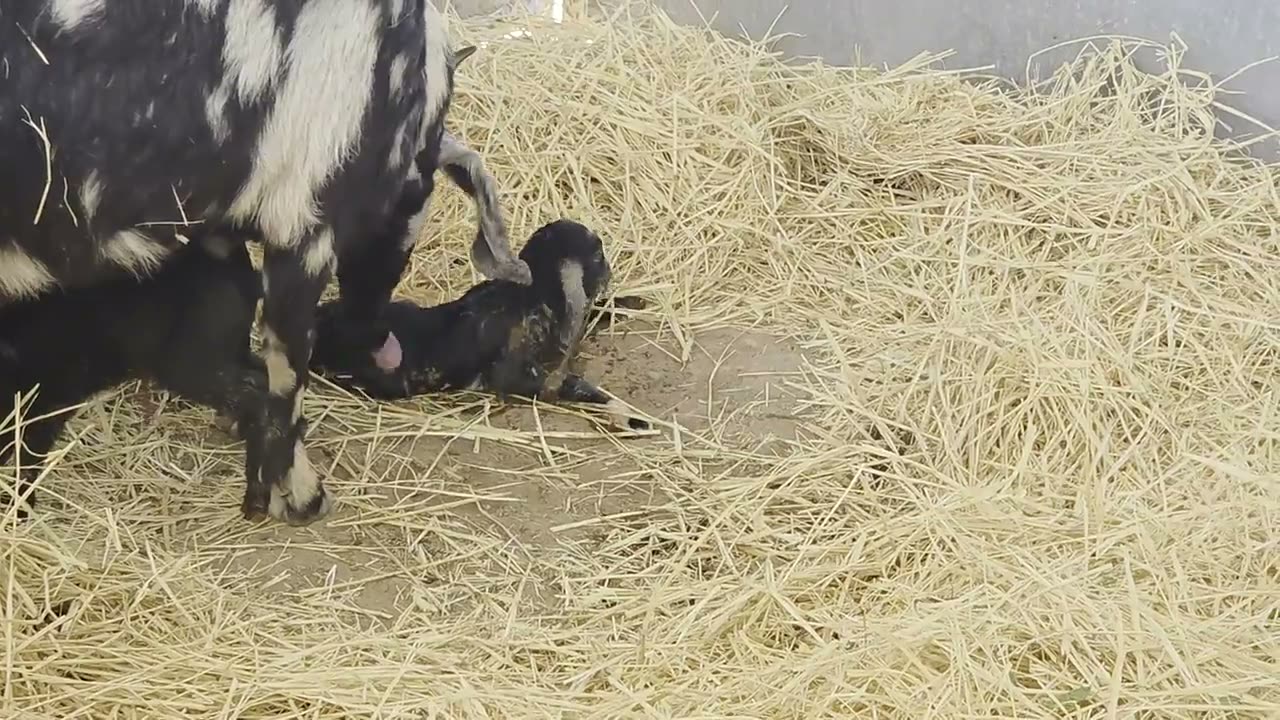
Chapter 4 — After-birth care
The medical part is small. The patient part is the whole rest of the day.
All four, together
Watch the story in one go.
Ch. 1 — In labor
A moon-spotted doe, calmly in the early stages.
Ch. 2 — A baby arrives
Birth, told plainly. Nothing graphic, all of it real.
Ch. 3 — First look
A new goat, on its feet within minutes.
Ch. 4 — After-birth care
What happens after — mom, kid, and the team.
Want more like this?
The rest of the farm is on the field notes page.
Lambs, working dogs, the deaf horse, the greenhouse build series, the Sevier River, and a man allegedly growing salad.